
Royal Flying Doctors Service
Location: Western Junction | Tasmania
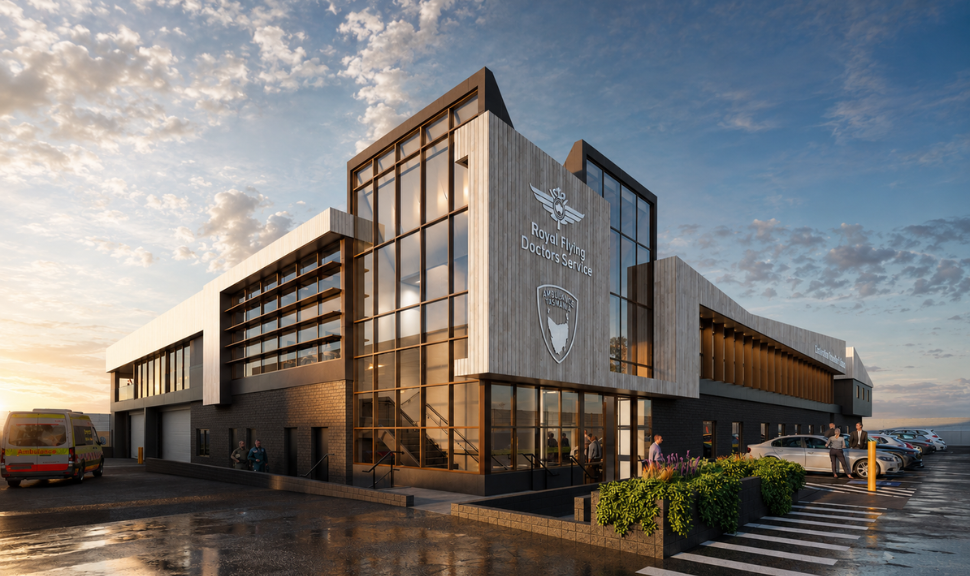
The new aeromedical base is conceived not simply as infrastructure, but as an architecture of readiness – a place shaped by urgency, care, endurance, and human connection. Positioned within the operational landscape of Tasmania’s aviation network, the project reimagines the existing ageing facility as a contemporary civic and operational landmark: calm under pressure, resilient in purpose, and quietly symbolic of the essential work undertaken within.
Operating day and night continuously, the building is designed around the choreography of emergency response. Aircraft movement, patient transfer, clinical care, operational coordination, maintenance, recovery, and rest are woven together into a singular architectural ecosystem. Rather than isolating functions, the project seeks to unify them, creating a highly integrated environment where healthcare, aviation, and emergency services coexist seamlessly in support of life-saving outcomes.
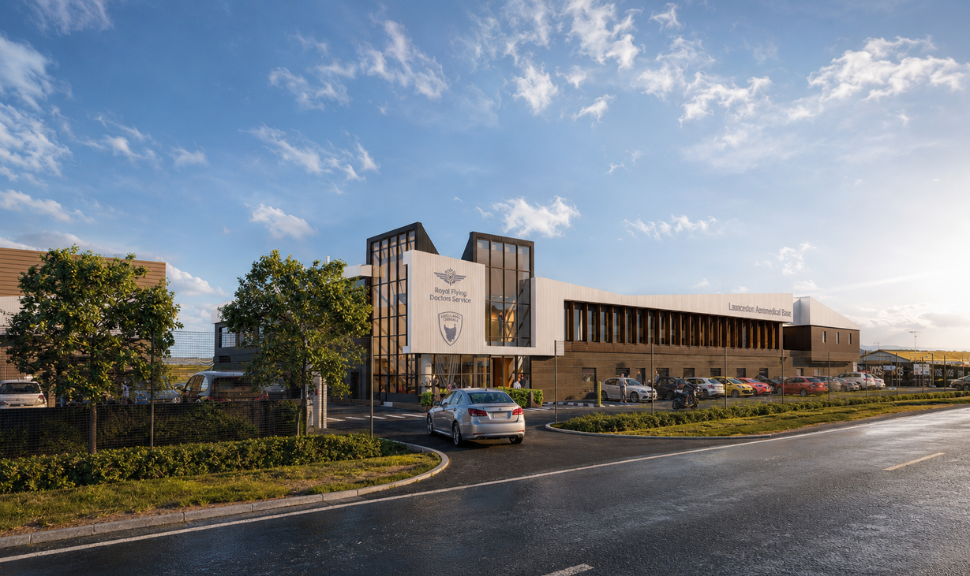
The architectural response emerges from the idea of shelter and alignment. The new built form wraps around the existing hangar, reinforcing and extending the operational heart of the site while transforming disparate elements into a cohesive precinct. This gesture creates both protection and connection – framing moments of arrival and departure, compressing operational intensity, and establishing a legible civic presence within the airport environment.
Formally, the building draws from the language of aviation infrastructure without imitation. Roof planes echo the rhythms and profiles of surrounding airport buildings along Evandale Road, while simultaneously negotiating the curved geometry of the existing hangar. The result is a composed and grounded form – industrial in character yet refined in execution – balancing utility with permanence.
Materiality is employed as a narrative device, expressing the differing conditions of occupation within the building. Areas requiring security, concentration, and operational control are articulated through solid and protective forms with carefully proportioned openings.
At the same time, communal and inhabited spaces open outward through larger expanses of glazing that invite light, orientation, and visual connection. The façade is intentionally restrained: tonal, robust, and understated. It does not seek attention through spectacle but instead embodies a quiet confidence appropriate to the critical services housed within.
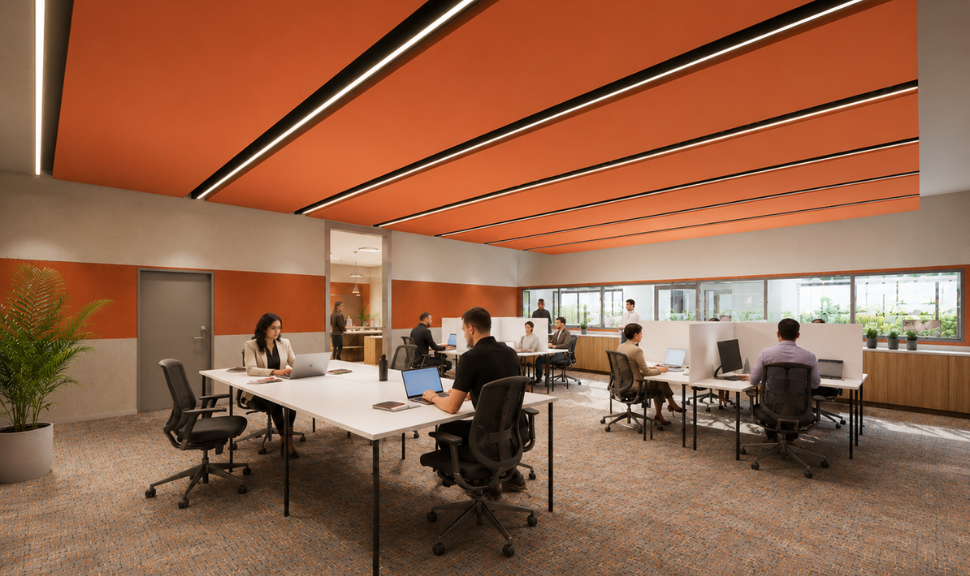
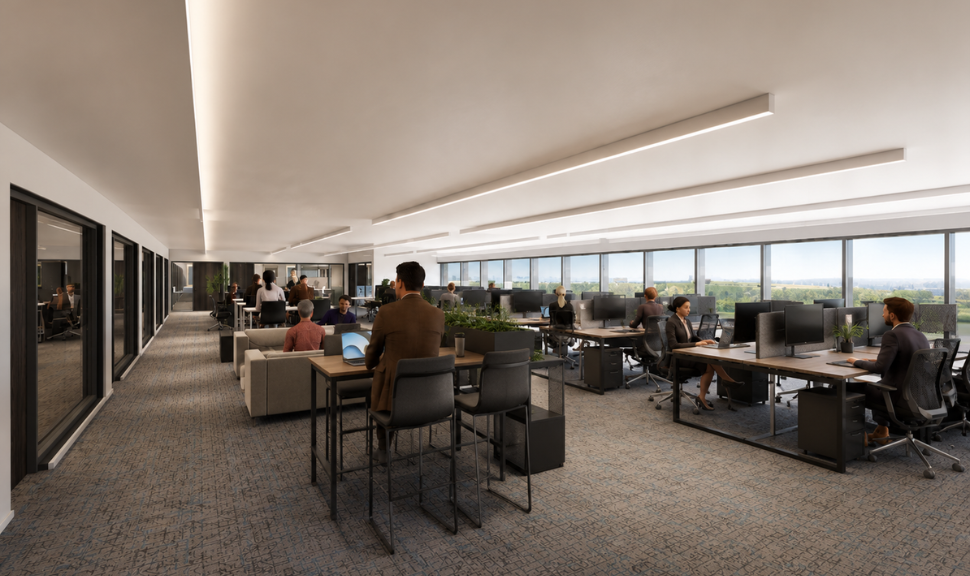
Internally, the project prioritises clarity, wellbeing, and human experience. A calm palette of muted and natural tones establishes visual cohesion and reduces sensory fatigue across a building occupied continuously and often under stress. Moments of colour are introduced strategically as points of orientation, warmth, and relief – subtle gestures that acknowledge the emotional realities of shift work, emergency response, and long operational hours.
The planning strategy is equally driven by balance: autonomy and collaboration, privacy and connection, focus and respite. Distinct zones support the operational needs of RFDS Tasmania, RFDS South Eastern, Ambulance Tasmania, and Tasmania Police, while shared spaces foster interaction, collective identity, and organisational cohesion. Self-contained accommodation for pilots and ambulance personnel is integrated not as an afterthought, but as an essential extension of the building’s duty of care – recognising rest, recovery, and wellbeing as critical operational functions in themselves.
Ultimately, the project aspires to transcend the expectations of a conventional emergency services facility. It is a building shaped around people: those arriving in moments of vulnerability, those responding under pressure, and those sustaining critical services around the clock. The architecture seeks to embody professionalism without austerity, resilience without monumentality, and civic presence without excess. In doing so, the aeromedical base becomes both operational infrastructure and cultural statement — a quiet beacon of care, preparedness, and service for Tasmania.
related projects
Royal Flying Doctors Service
Western Junction | Tasmania

BMW Showroom
Invermay | Tasmania
Mowbray Heights Primary School
Mowbray | Tasmania